

Parent Guide · Reading
How to Teach a Child to Read Chinese (Even If You Can't)
Maybe you speak Cantonese or Mandarin at home but never learned to read. Maybe you speak none at all. Good news: your child doesn't need you to be the teacher. They need the right system and a little daily rhythm.
By the Motherly Notes teaching team · 7 min read
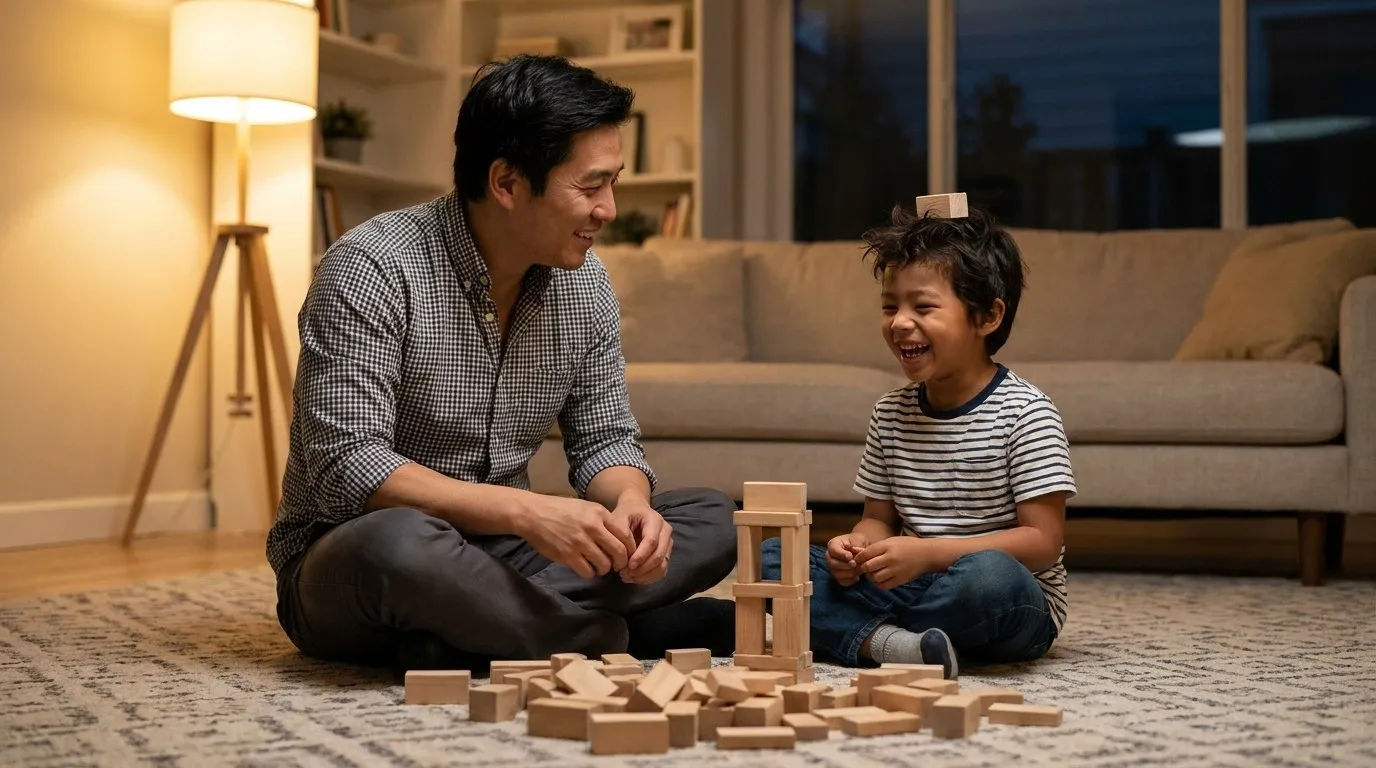
To a new reader, Chinese looks like thousands of random drawings to memorize one by one. That is why so many families give up. But characters aren't random. Most are built from a small set of meaningful parts, like words built from Lego bricks.
Comprehension comes first
Language is about exposure. Children read best when the words on the page are words they already understand by ear. That's why we recommend at least one hour of Chinese a day. Some families hire a nanny, but the talk often stays stuck in kitchen Chinese. Others join our live classes for an hour a day. Most of our strongest students come about six hours a week, which is the kind of exposure it takes to fully pick up a language.
Our classes are full immersion with native teachers, most of them in Taiwan, who talk the way people really talk there and know the latest trends. Listening to real conversation is like taking a trip abroad without leaving the living room. Here, Chinese isn't a subject. It becomes a lifestyle.
Characters are built, not memorized
- 木 mù
- One tree.
- 林 lín
- Two trees: a grove.
- 森 sēn
- Three trees: a whole forest.
- 明 míng
- Sun 日 plus moon 月: bright.
- 好 hǎo
- Woman 女 plus child 子: good.
When kids see the pattern, they start guessing meanings on their own. That moment of “wait, I can figure this out” is what turns reading from a chore into a puzzle.
“You don't have to read Chinese to raise a Chinese reader. You have to protect ten minutes a day.”
Why 3,000 characters?
About 3,000 common characters cover the vast majority of what appears in everyday books, signs and news. It sounds like a mountain, but at a few new characters a day, with steady review, it is a climb kids can finish over several years.
Five steps that work at home
- Hear it before you read it
- Daily listening and real conversation build the vocabulary that reading depends on. A word a child already knows by ear is easy to recognize on the page.
- Learn the building blocks first
- A few hundred common parts make up most characters. Once a child knows that 氵 means water, 河, 海 and 洗 stop being strangers.
- Read words, not lonely characters
- Characters stick when they live inside words and sentences kids care about, like a joke, a comic or a recipe.
- Review a little, every day
- Ten minutes daily beats an hour on Saturday. Memory needs short, spaced visits, right before a word is forgotten.
- Let reading help fade
- Pinyin or zhuyin above the characters gets kids reading real stories now. As confidence grows, turn it off and let the characters carry the load.

Where we come in
Our teachers handle the teaching, so you don't have to. Live and self-paced classes introduce characters through stories and subjects kids enjoy. Between classes, our Celestial Climb learning world takes kids up a 3,000-character mountain, reviewing old words as new ones arrive. Reading help in pinyin or zhuyin can be switched on or off at any time, in Traditional or Simplified.
Just as important is who else is in the room. In class your child joins about four other kids who laugh at the silliest jokes and argue with each other using idioms. When the cool kid in class uses a new phrase, suddenly everyone wants to use it too. Many families invite friends and take classes together, and that's when the language really comes alive.
You'll see progress on your parent dashboard. No flashcards to make, and no pretending you know what 鬱 means.
Find out where your child starts
Our free Find My Level check shows how many characters your child already knows. Or try one live trial class for $20.